研究简介Abstract
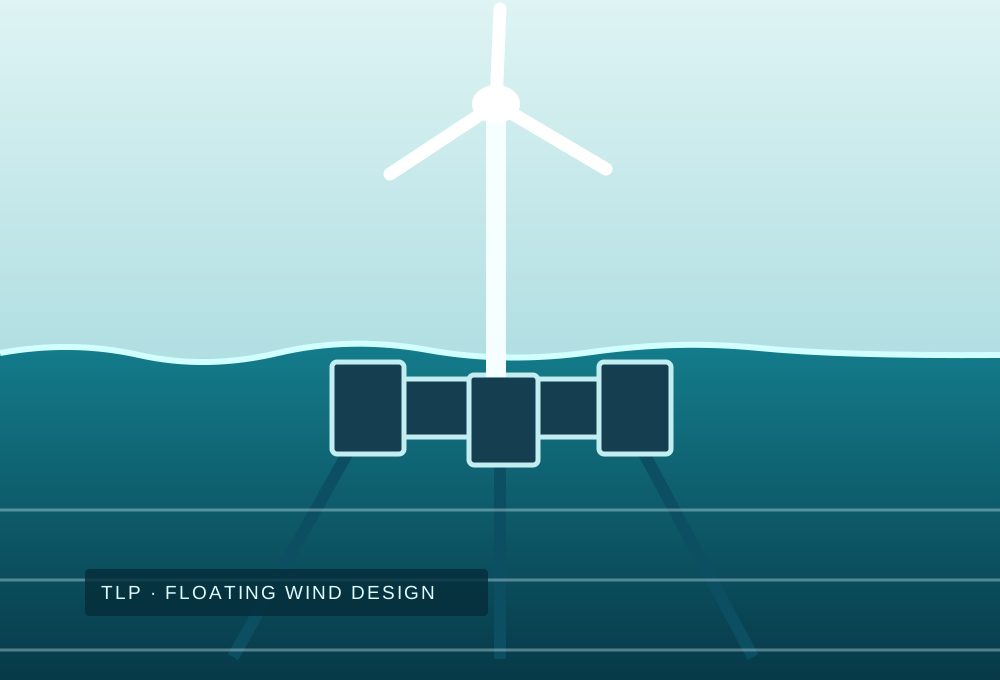
面向张力腿式浮式风机平台,利用 ANSYS AQWA 评估浮体运动与系泊张力,并结合 optiSLang 中的进化算法研究结构参数与预张力之间的权衡。在满足拖航稳性、运行与极端载荷工况下性能约束的基础上,以降低单位容量用钢量为设计目标。
This project studies a tension-leg floating wind turbine platform using ANSYS AQWA to assess platform motion and mooring loads. Evolutionary optimization in optiSLang is used to explore trade-offs among structural geometry, pretension, towing stability, and performance constraints, with structural steel use per rated capacity as a primary design objective.
研究方法与内容Methodology & Contributions
- 在 ANSYS AQWA 中建立浮体–系泊耦合分析模型。Develop coupled floater–mooring models in ANSYS AQWA.
- 分析平台拖航稳性、运动响应以及张力腿载荷。Evaluate towing stability, platform motions, and tendon loads.
- 通过多目标进化算法开展参数寻优。Use multi-objective evolutionary algorithms for parametric optimization.
- 对优化前后的结构性能和单位容量用钢量进行比较。Compare design performance and steel mass per unit capacity.
数值模拟与图片展示Simulation Gallery
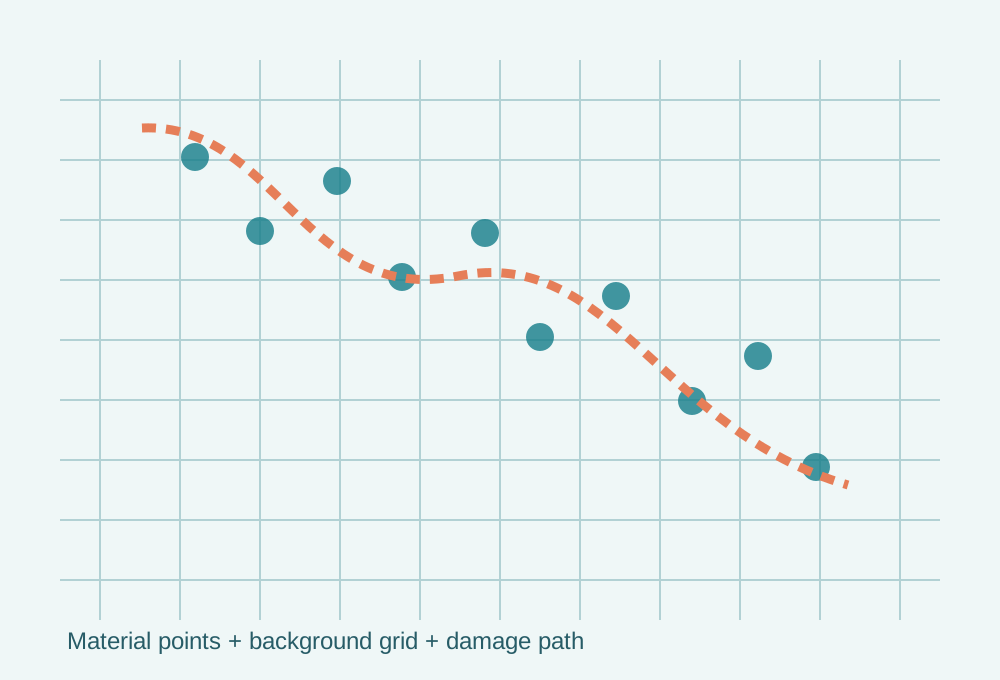
下方图像为用于网站排版的示意素材。可替换为你自己的断裂云图、载荷曲线、模型快照或实际视频。These layout illustrations should be replaced with real fracture plots, ice-load histories, simulation renders, or videos from your work.
演示视频Video Demonstration
相关论文与资源Paper & Resources
论文 PDF、技术文档、代码与补充材料可在此处添加,正式公开前请核对版本及分享权限。Add a verified paper PDF, technical document, source code, and supplemental files here when ready to share.